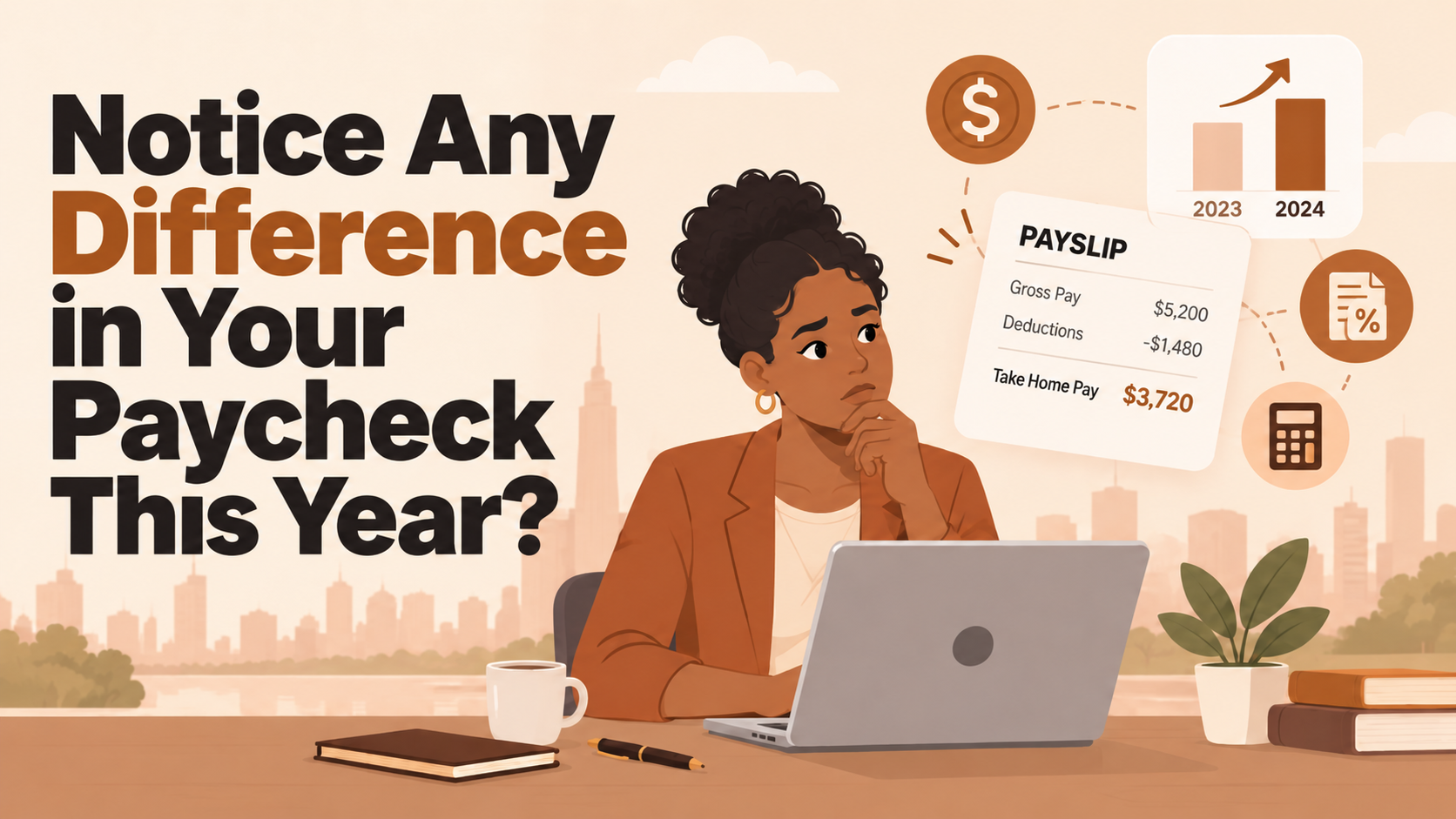
You check your salary alert, then open your payslip because the amount doesn’t look right. Your employer hasn’t changed your salary, but the tax deduction has moved. With rent, transport and food already competing for that money, another unexplained change is the last thing you need.
Sound familiar? Nigeria changed its personal income tax rules from 1 January 2026, and those changes can affect your take home pay. Your employer collects this tax through PAYE, meaning Pay As You Earn.
That doesn’t automatically mean payroll got everything right. But understanding what changed gives you a better starting point than wondering whether someone pressed the wrong button.

If you’ve compared an older payslip with a recent one, you might have noticed that CRA has disappeared. That stands for Consolidated Relief Allowance, an amount that reduced your income before payroll calculated tax.
Under the old rules, CRA combined 20% of gross income with the higher of ₦200,000 or 1% of gross income. The old law defined the income figure for that calculation. However, CRA no longer applies to your 2026 income.
You haven’t lost every deduction, though. Eligible pension, National Housing Fund and national health insurance contributions still count. Qualifying mortgage interest, certain life insurance or annuity payments, and rent relief can also reduce your chargeable income.
Each has conditions, which the Joint Revenue Board’s guidelines explain. So, if your current payslip still uses CRA, ask payroll what period that calculation covers.
Does the First ₦800,000 Escape Tax?
Yes, but there’s a detail that matters. The new bands apply a 0% rate to the first ₦800,000 of annual chargeable income. That isn’t necessarily the same figure as your annual salary.
Chargeable income is what remains after subtracting the deductions you qualify for. Think of it as the amount payroll uses to work out your tax, after allowing those deductions.
The rates then rise through 15%, 18%, 21% and 23%, reaching 25% at the top band. However, each rate applies only to the money within its own band. Moving into a higher band doesn’t suddenly put your whole salary at that rate.
For example, suppose your annual chargeable income comes to ₦5.2 million after deductions. Here’s how the calculation works:
The first ₦800,000 at 0% gives ₦0 in tax. The next ₦2.2 million at 15% gives ₦330,000 and the remaining ₦2.2 million at 18% gives ₦396,000.
Your total annual tax would be ₦726,000. The useful question for payroll is therefore which bands they used, rather than which single rate they applied.
Notice that the example starts with chargeable income, not the salary before deductions. If your annual salary happens to be ₦5.2 million, your result may differ because your eligible deductions affect the starting figure. Comparing salaries alone won’t tell you whether two people’s tax bills should match.
Rent Relief Can Help, but Check the Amount
If you rent your home, this part deserves your attention. You can claim 20% of eligible annual rent, with a maximum relief of ₦500,000. It reduces the income used to calculate tax; it doesn’t put that amount straight into your bank account.
If your eligible rent is ₦1.5 million for the year, 20% comes to ₦300,000. That’s the amount you deduct from income, not from the final tax bill.
If your annual rent is ₦4 million, 20% comes to ₦800,000. However, the cap brings your claim down to ₦500,000.
Now, you might be wondering whether everyone who rents can simply claim the maximum. Unfortunately, no. The ₦500,000 limit is a ceiling, so you claim less when 20% of your eligible rent is lower.
You also need accurate rent details and supporting records. The JRB asks for your name, rent amount, period covered, property address and specified landlord details. If your payment covers several calendar years, only the portion relating to the relevant year counts.
Own the home you live in? You can’t claim this relief without paying rent, although qualifying mortgage interest may fall under a separate deduction. The takeaway is to check what you actually qualify for before assuming the maximum applies.
What Should You Ask Payroll?
You don’t need to arrive with a law degree or start an argument. A simple request for the calculation is a reasonable place to begin. Your salary matters, and the figures should make sense to you.
It can feel awkward to question a deduction when everyone else seems to accept theirs. You might also worry about sounding difficult. But you aren’t accusing anyone by asking how a figure was reached; you’re checking the money you rely on. A clear explanation helps you and payroll avoid repeated confusion.
1. Compare your PAYE tax deductions. If your salary hasn’t changed but the deduction has, ask what caused the difference. Request a breakdown showing your income, eligible deductions and tax bands.
2. Check your rent relief. Ask which rent amount payroll used and whether they applied the cap correctly. Keep your tenancy agreement, receipts and payment records together so you can support the claim.
3. Ask about anything that still looks wrong. Software depends on the figures and settings people enter. “The system calculated it” doesn’t explain whether those figures were correct.
If you find a mismatch, ask payroll to review it and explain any correction. Keeping that conversation in writing makes it easier to follow up without starting again each time.
This Is About the Money You Live On
A tax change can sound distant until it affects your groceries or transport home. Understanding your payslip won’t remove those bills, but it can help you spot a missing relief or challenge an unexplained deduction.
Startpal’s Regulatory News covers more changes affecting workers and businesses. If you have questions or need a consultation, someone at Startpal will be happy to talk. Get in touch for a conversation about your next steps.
Share this with a colleague who’s also trying to understand their payslip. You both deserve clear answers about your pay, and asking for them is a good place to start.