
Your auditor comes highly recommended, the fee fits your budget, and everyone is ready to sign. Then someone checks the FRC audit register and cannot find the firm’s name. Suddenly, the question is no longer how much the audit costs, but whether the firm can legally do it.
That is an awkward discovery before an appointment and a much bigger problem after you have paid. A familiar name, years of experience, or a director’s recommendation can make a firm feel like a safe choice. None of those settles its registration status.
Since 1 April 2026, the Financial Reporting Council of Nigeria says only firms on its National Audit and Assurance Firms Register can carry out this work. Before you approve the fee or sign the appointment letter, check the firm and the professional who will sign your report. Here is what to look for.
What Changed for the FRC Audit Register?
The Financial Reporting Council of Nigeria, or FRC, gave audit firms and assurance providers a hard deadline of 31 March 2026 to register or update their profiles. From 1 April, its National Audit and Assurance Firms Register became the official list of who is legally permitted to do this work.
The FRC’s official notice sets out the rule. A firm not on the Register cannot take on a new engagement, accept one, or continue an existing one. Any engagement carried out by an unregistered firm is invalid and unlawful. If the firm is not on the Register, it should not be doing your audit.
Does This Only Affect Big Companies? You might expect this rule to apply only to banks and listed companies, but the notice also names private organisations.
The FRC’s notice addressed public interest entities, government institutions, regulated entities and private organisations. A private company cannot assume that not being publicly listed puts it out of scope.
Now, I know what you’re thinking. “Surely registration is the auditor’s problem, not mine.”
Not entirely. The FRC warns that a company hiring an unregistered firm can face regulatory sanctions, and those consequences may extend to its responsible officers. Directors and managers cannot simply say, “We assumed the auditors handled their own compliance.” In the FRC’s view, that is not how it works.
Check the Firm and the Person Signing
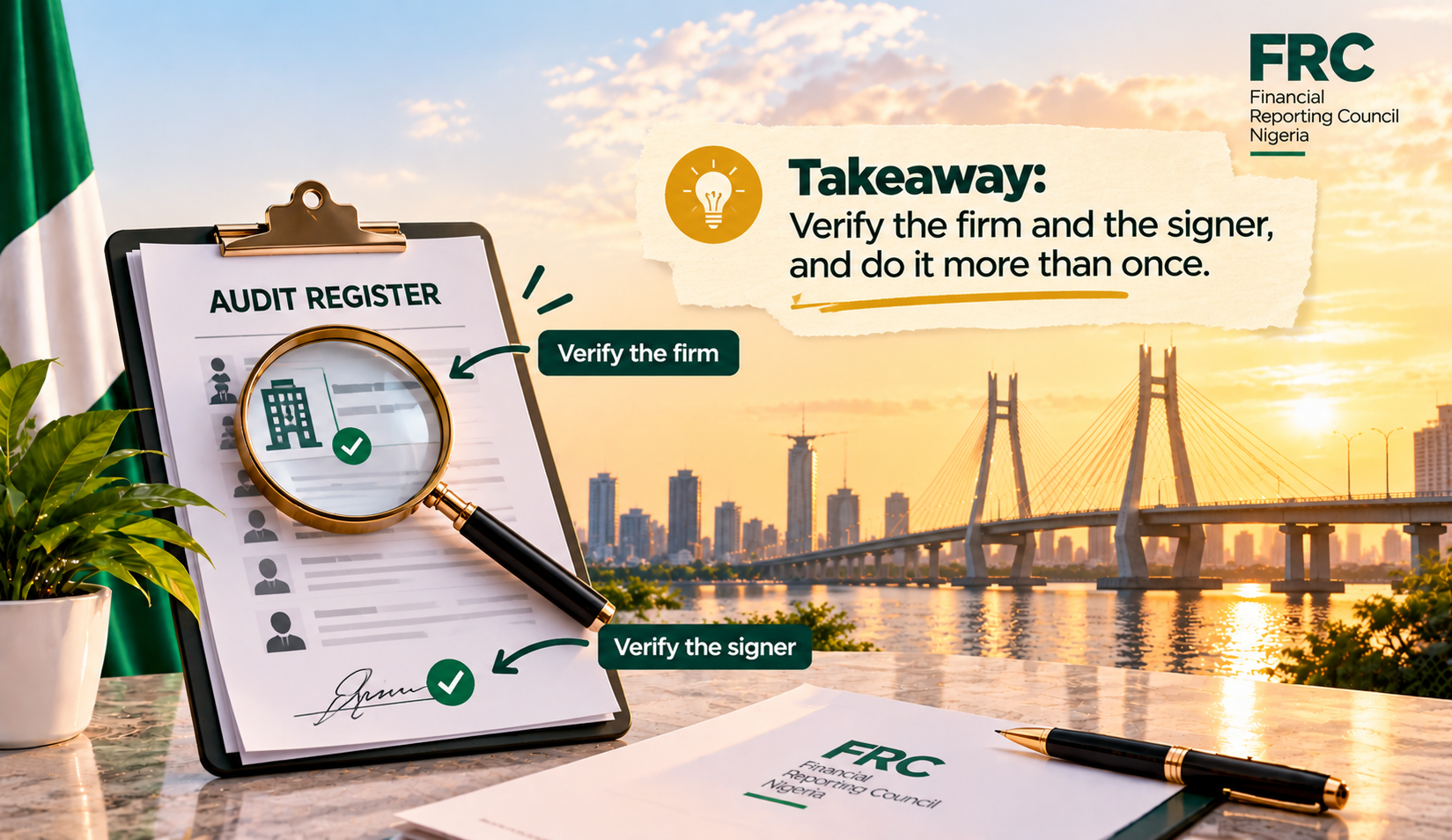
The FRC says you should verify two things: the firm itself, and the professional who will sign the report. Both checks should happen before appointment and throughout the engagement.
Say you appoint ABC & Co. in May. The firm is on the Register, so you tick the box. Then the signing partner changes in July. If nobody rechecks, you may not be doing what the FRC expects.
Think of it as confirming both the company and the individual putting their name on the opinion. Verify at appointment, save your evidence, and repeat the check before the report is finalised.
Who Actually Owns the Check in Your Office?
The check can get lost when finance assumes Legal handled it and Legal expects Procurement to have done it. Unless someone takes responsibility, the team may approve the appointment without checking anything.
So decide who owns this step. Procurement checks during vendor onboarding, the company secretary verifies before formal appointment, and finance re-confirms before the report is signed. The exact split matters far less than having a specific name attached to each stage.
How a Lower Fee Can Create a Bigger Problem
In this hypothetical example, Greenfield Manufacturing Limited receives three proposals: Firm A at ₦18 million, Firm B at ₦13 million, and Firm C at ₦9 million. Firm C makes a strong impression, and the finance director has already mentioned it to the board. Then the company secretary searches the Register and Firm C is not listed.
Before accepting the ₦4 million saving against Firm B, the company needs to resolve Firm C’s status. The FRC says an audit by an unregistered firm is invalid. Paying less offers little comfort if the company later needs a replacement audit.
“But They Are ICAN-Certified!” Professional membership and FRC registration are two entirely different questions. The FRC Act and Audit Regulations create their own separate framework that goes well beyond general professional certification.
So do not stop at “are they ICAN members?” Ask whether the firm and the signing professional are both properly registered under the FRC framework for this specific type of engagement.
Takeaway: Qualified and registered are two different checks. Both matter.
It Goes Beyond Statutory Audit
The framework also reaches beyond your standard year-end audit. It also covers assurance, attestation, verification and independent opinions relied on for financial reporting or public-interest purposes.
The FRC has pointed to areas including actuarial work, valuations, tax assurance, IT assurance and sustainability assurance. With sustainability reporting requirements expanding for certain entities, expect this question to come up more frequently.
Your Five-Minute Check
You can start this check yourself using the FRC website. If a name or registration status is unclear, ask for confirmation before proceeding.
Open the FRC audit register and look for the firm’s exact legal name before appointment. Confirm the signing professional’s registration status separately. Save a screenshot or a dated note alongside your appointment papers. Then repeat the check before the professional signs the report.
If an expected firm is missing, ask for its registration details and contact the FRC to clarify the position. The register page acknowledges possible errors and omissions. Keep the written response with your records, because a verbal assurance does not settle the issue.
Why This Matters to You
Whether you are a finance manager, company secretary, director or audit committee member, this question now sits on your desk alongside every other pre-appointment check. Auditor selection used to be about fees and experience. Today, it starts with one non-negotiable question: are they on the Register?
Take five minutes this week and build that single check into your appointment process. And if this was useful, share it with the colleague who handles vendor procurement, because in most organisations, everybody quietly assumed somebody else had already taken care of it.
You can find more updates in Startpal’s Regulatory News section.
Have questions or need a consultation? Someone at Startpal is happy to talk through your business and compliance concerns. Contact Startpal to arrange a conversation.