You’re at a filling station in Lagos, and the queue isn’t moving. Somehow, two streets down, another station has full tanks and no queue at all. You’ve probably wondered why. Is it hoarding? Bad luck? Could unfair competition be part of the problem? Proposed petroleum competition rules aim to address that concern.
A queue alone cannot prove that a company has broken the law. However, the proposed rules could affect how companies compete to supply your fuel.
Petroleum Competition Rules: What’s Actually Happening?
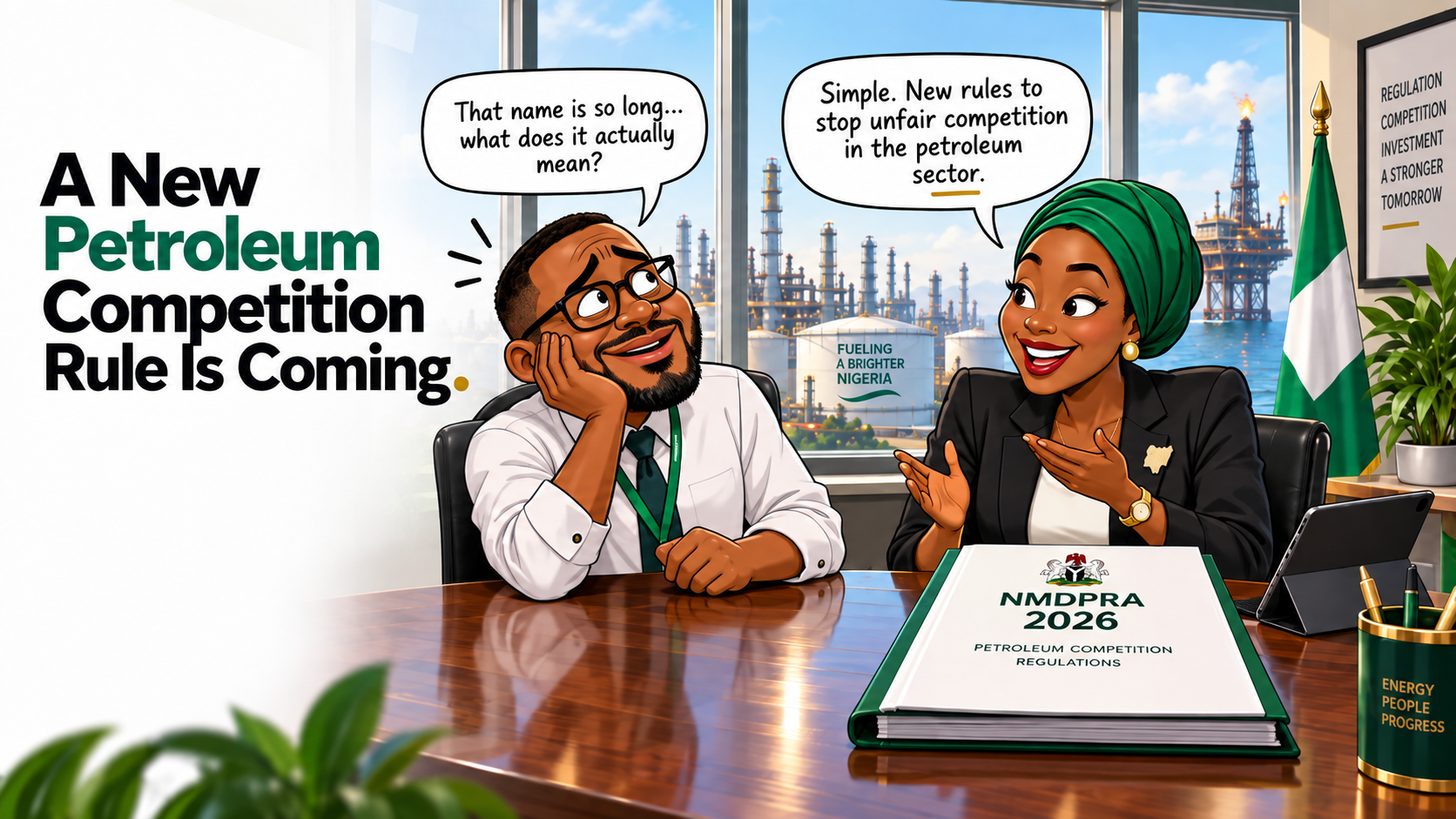
The Nigerian Midstream and Downstream Petroleum Regulatory Authority, or NMDPRA for short, is developing new rules called the Midstream and Downstream Petroleum Prevention of Anti-Competitive Practices and Behaviour Regulations, 2026. Long name, I know. It’s a set of rules designed to stop big petroleum companies from playing dirty with each other, and with you.
These rules come from Section 216 of the Petroleum Industry Act, 2021. NMDPRA discussed the draft with industry representatives at its 22 September 2026 consultation. These are proposals, so the final wording and implementation date still matter.
What Does “Anti-Competitive” Actually Mean?
Let me be crystal clear: “anti-competitive” simply means one company, or a group of them, doing something that stops fair competition. Think price-fixing, blocking rivals from using shared infrastructure, or secretly agreeing not to compete with each other at all.
If three fuel companies secretly agree on a selling price instead of competing independently, that is price-fixing. The proposed petroleum competition rules target this kind of agreement. Similar prices alone, however, do not prove collusion.
Now, I know what you’re thinking: what does pipeline access have to do with me? Quite a lot, actually.
Under the proposed rules, companies that own pipelines, storage terminals, and depots can’t unfairly block smaller competitors from using them. A company controlling that infrastructure could use access delays to put a rival at a disadvantage. The new regulations say access has to be fair, transparent, and based on genuine reasons like safety or technical capacity, not on who the owner simply prefers.
Why should you care? Because when smaller players get fair access to move and store fuel, competition increases. More competition usually means better prices and better service for the person standing in that queue. That’s you.
How Petroleum Competition Rules Could Make Charges Clearer
Here’s the thing: right now, some fuel prices and access terms aren’t fully transparent. A company could quietly offer one customer a better deal than another, off the books, with no public record anywhere.
The proposed rules would require operators to publish their tariffs, fees, and service conditions. Hidden surcharges, secret discounts, and undisclosed side agreements would be prohibited outright. That means everyone competes on terms they can actually see, and nobody gets quiet backdoor treatment.
A common misconception is that being the biggest player in a market is automatically illegal. It isn’t, and the regulations are clear about that. A company can dominate a market and still be playing fair.
What crosses the line is abusing that size, like using market power to squeeze out competitors or quietly exploit customers who have nowhere else to go. The rules pay close attention to companies operating across multiple stages of the supply chain, sometimes called vertical integration, to make sure they aren’t favouring their own subsidiaries while starving everyone else.
Yes, Even AI Pricing Is on the Radar
The proposed petroleum competition rules also address algorithmic and AI-based pricing. As companies increasingly let software decide fuel prices in real time, regulators are watching to make sure that technology isn’t being quietly used to coordinate prices across supposed competitors, a risk that the proposed rules would address more directly.
What Happens If They Break the Rules?
Unfortunately, the enforcement details are still being finalised, so this part is a little fuzzy for now. What we do know is that NMDPRA would have powers to investigate, demand information, issue cease-and-desist orders, and impose corrective measures on offenders. There would also be protection for whistleblowers who report violations, which matters if you ever work in this industry and notice something that feels off.
One more layer worth knowing about: the Federal Competition and Consumer Protection Commission also has a say in competition matters. The two regulators are expected to work together, sharing information and coordinating reviews, rather than each running its own separate process. Whether that cooperation works smoothly in practice is one of the open questions the consultation is still trying to answer.
What Petroleum Competition Rules Could Mean for You
Let’s bring this back down to earth. Petroleum touches almost everything in Nigeria: transport fares, food prices, generator fuel, the cost of running a small business. When a handful of companies can quietly control supply or fix prices, that cost lands on you, whether you notice it happening or not.
These regulations, properly enforced, are meant to keep that in check. That doesn’t mean fuel prices drop tomorrow. The aim is to strengthen oversight of petroleum markets. Any effect on pump prices would also depend on enforcement, supply costs and wider market conditions.
One More Thing
The petroleum competition rules remained proposals at the September consultation. The final version could differ from the draft discussed here.
If this helped something click that felt confusing before, share it with someone else who’s been wondering why fuel prices never quite add up. The more people understand rules like this, the harder it becomes for anyone to quietly break them.
For more updates, browse our Regulatory News articles. If you have questions or need a consultation, someone at Startpal is happy to talk. Contact Startpal to discuss what these developments could mean for your business.