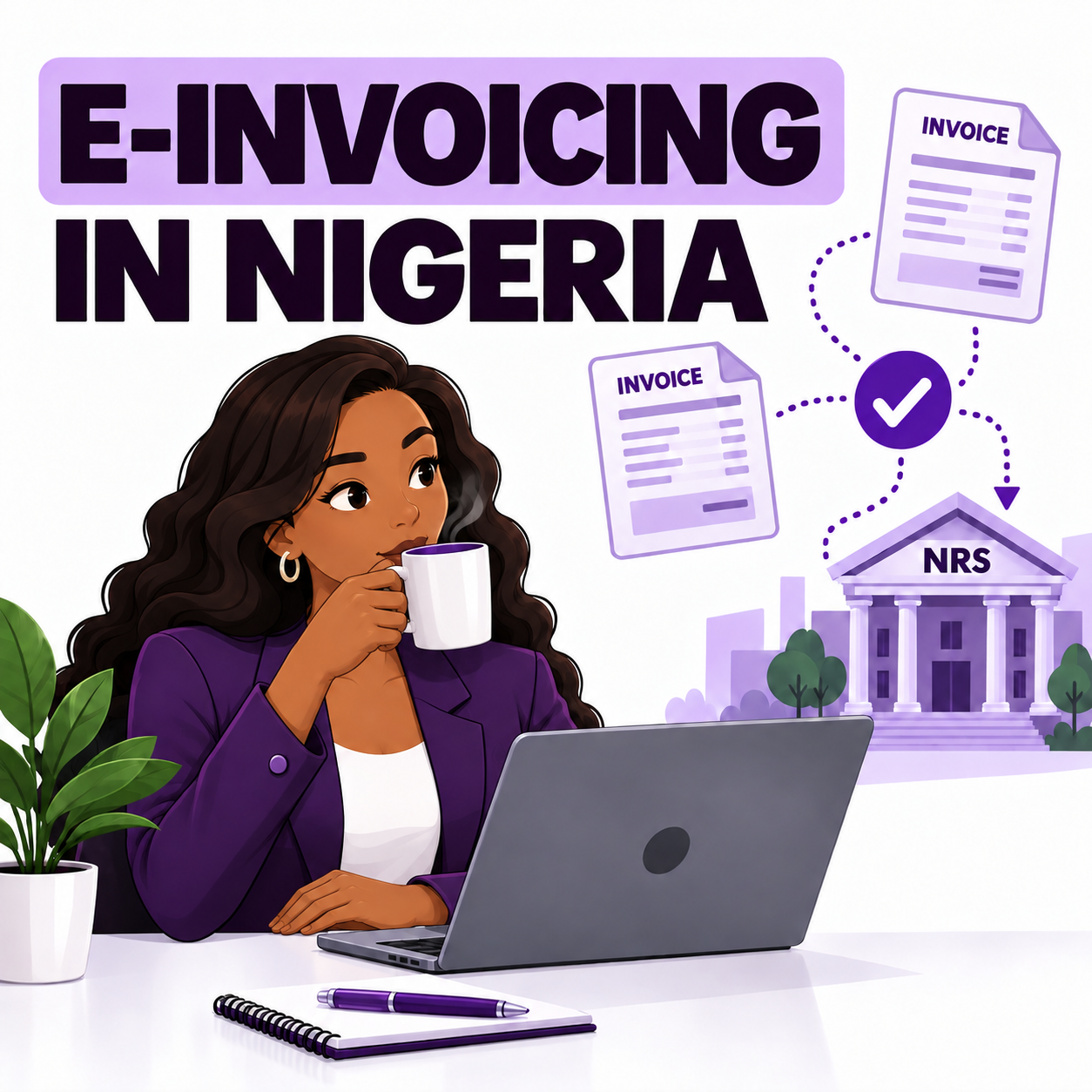
You sell something, send an invoice and wait for the customer to pay. For years, that was a fairly ordinary part of running a business. But e-invoicing in Nigeria is changing what happens to the information on that invoice.
For businesses covered by the rules, invoice details go through an approved digital process for validation and reporting. The invoice still helps you collect your money. It also gives the tax authority a clearer view of the transaction.
If your first thought is, “Does this mean I need new accounting software?”, that’s a fair question. Before you buy anything, though, it helps to understand what the system does and whether your business needs to use it.
How e-invoicing in Nigeria started
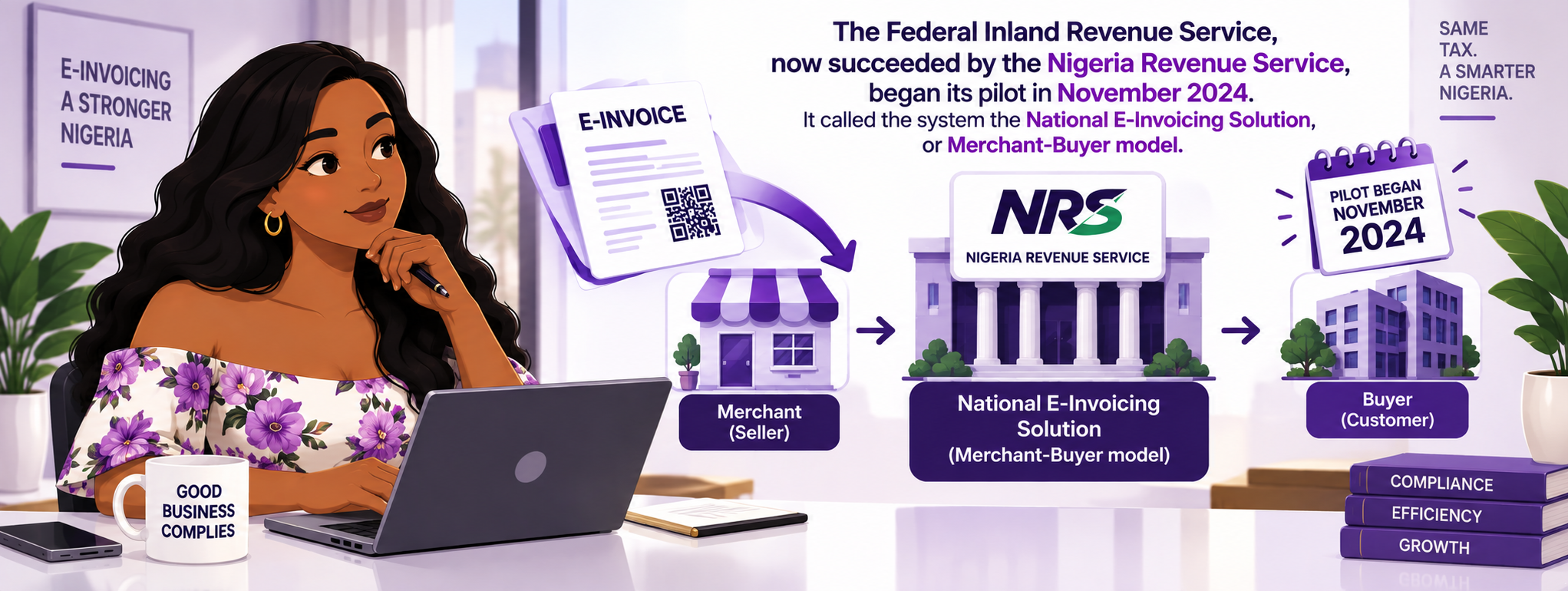
The Federal Inland Revenue Service, now succeeded by the Nigeria Revenue Service, began its pilot in November 2024. It called the system the National E-Invoicing Solution, or Merchant-Buyer model.
The original FIRS launch notice set 1 August 2025 as the start of the mandatory rollout. It covered large taxpayers with annual turnover of ₦5 billion and above.
Those businesses had to register, connect their invoicing systems and start generating, validating and transmitting invoices through the approved channels. That was the initial rollout. Businesses should check subsequent notices for the deadlines and requirements that apply to them now.
The wider tax rules have changed too. President Bola Tinubu signed four tax reform laws on 26 June 2025. They included the Nigeria Tax Act, Nigeria Tax Administration Act and the law establishing the Nigeria Revenue Service.
The Finance Ministry’s transition guidance confirms that the Nigeria Tax Act took effect on 1 January 2026. Each of the four laws has its own commencement date, so don’t assume every change started at once.
What does e-invoicing actually look like?
Let’s say your company sells ₦10 million worth of equipment to another business. Your accounting software creates an invoice with the equipment price, any applicable VAT and the total. You email it to the customer and keep a copy.
An electronic invoicing system does more than turn that document into a PDF. It lets software exchange the invoice details in a structured format and send them through the required checks.
So the information can reach the tax authority much closer to the sale itself. Your finance team doesn’t have to wait until an audit to pull together the records of that transaction.
You may also come across the Automated Tax Remittance System, or ATRS. Its website describes tools for reporting taxable transactions and issuing and validating electronic invoices and receipts. However, don’t assume every government invoicing tool follows the same process. For the Merchant-Buyer rollout, use the guidance for that specific system.
Why the tax authority wants this, and what you get out of it
Imagine a company reports ₦800 million in sales for the year. A tax officer may need to compare its invoices, bank transactions, VAT records and accounts to check that figure.
Digital invoicing gives the authority more transaction information to work with. Better transparency and real-time visibility were among the goals in the launch notice.
But there’s a practical benefit for businesses too. Think about how often someone in finance types the same invoice details into different systems. The invoice number goes here, the customer’s name goes there, and someone has to check that both totals match.
When the systems connect properly, they can pass those details between them. That can mean less copying, fewer typing errors and less time spent tracking down mismatched records.
Of course, the connection has to work. Buying software with “compliant” on the sales page won’t, by itself, fix messy records or a badly organised invoicing process.
Does e-invoicing in Nigeria affect smaller businesses?
“We don’t make anything close to ₦5 billion. Why should we worry?”
The ₦5 billion figure came from the initial large-taxpayer rollout. It isn’t a promise that every smaller business will always stay outside the system. Check current NRS notices before deciding where your company stands.
Also, your customers may already be dealing with these requirements. A large company might change the invoice details it asks suppliers to provide. It may also introduce a different way to submit them.
That can leave a smaller vendor adjusting its process, even when the vendor isn’t directly covered by the same mandate. If you supply large businesses, ask their finance teams whether their invoicing requirements have changed.
Will your accounting software cope?
This is where an ordinary compliance task can turn into a long meeting.
Your company may have used the same accounting package for seven years. Everyone knows where things are. Then someone asks whether it can connect to the government’s platform, and nobody has a clear answer.
Start with your software provider. Ask which integration it supports, what setup involves and whether you can test it before using it for actual invoices. Get a clear explanation of any extra charges as well.
The original mandate required covered businesses to integrate their invoicing systems. The NRS Merchant-Buyer portal is a useful starting point for the relevant platform and onboarding information.
Bring finance, tax and IT into the conversation early. Procurement may need to join too, especially if supplier records need work. Your accountant shouldn’t have to solve the software side alone.
Don’t leave the awkward questions until the deadline
Suppose you discover three weeks before your deadline that your software can’t connect properly. Now you need to sort out the connection, clean customer records and train staff while keeping invoices moving.
That’s a lot to squeeze into a normal working week.
Instead, ask a simpler question now: if we had to send structured electronic invoices tomorrow, where would we get stuck?
Perhaps customer records are incomplete. Maybe only one person knows how to correct an invoice. Finding those problems early gives you time to deal with them.
Also check who can access the customer details you send between systems. Our guide to customer data protection responsibilities explains why those records need care.
Getting ready for e-invoicing in Nigeria
Pick one recent invoice and follow it from the sale through to payment. You don’t need an expensive review to start asking useful questions:
- Who creates the invoice, and which software do they use?
- Where do the customer details come from?
- Who checks the VAT treatment and approves the invoice?
- How do you send it, correct it or cancel it?
- How does finance match the payment to the invoice?
Then check whether your business falls within the current mandatory requirements. Use the latest NRS guidance and confirm any uncertainty before choosing software or agreeing to an integration plan.
If your business needs to comply, give the team time to test the process. If it doesn’t yet, use that time to tidy up your records and speak to your provider.
And please don’t buy a new package just because a WhatsApp advert calls it “FIRS compliant”. Ask what it actually supports and whether that meets your company’s requirements.
The next time you send an invoice, think about where its information goes after it leaves your screen. Your customer still needs it to pay you. Increasingly, the tax authority wants a clearer record of it too.