
When money is tight and a loan app offers ₦100,000 within minutes, it’s easy to focus on the relief of seeing the money arrive. By Friday, though, that relief starts to fade as you notice a processing fee, another charge buried in the terms and an interest calculation that doesn’t quite add up.
Then repayment day arrives, your phone won’t stop ringing, and somehow someone in your contacts gets a message about your debt.
That’s exactly why Nigeria built rules for digital lending: the DEON Regulations, short for Digital, Electronic, Online or Non-Traditional Consumer Lending Regulations 2025. And there’s a 2026 update you need to know.
Were the DEON Regulations Suspended?
Yes, for a few months, after a Federal High Court order paused enforcement during a lawsuit. In its 20 July 2026 announcement, the Federal Competition and Consumer Protection Commission (FCCPC) said the court dismissed the case, upheld the Regulations and lifted the order. FCCPC confirmed that enforcement had resumed.
That was not the end of the legal dispute. Reports on 22 July said WASPAN had appealed and sought another injunction. Filing that request is not the same as the court granting it.
What Do the DEON Regulations Cover?
Wider than “loan app” suggests. It covers unsecured consumer lending through digital, electronic, online or non-traditional channels, and the value lent needn’t be cash, airtime advances, data advances, cashback with repayment attached, all count. If your telecom offers “borrow ₦2,000 airtime now, repay later,” that’s consumer credit too.
There is an important limit: the Regulations exclude banks and financial institutions licensed under the Banks and Other Financial Institutions Act 2020 from their definition of a lender/service provider. Not every financial app falls under this same framework.
A Lender Can’t Just Decide You Want a Loan
Credit must be opt-in, you have to actively request and consent to it, and automatic or pre-authorised lending is prohibited.
Compare “Would you like to borrow ₦5,000?” with “Congratulations, we’ve credited your account with ₦5,000, repayment plus fees due next week.” That’s exactly what these rules exist to stop: credit should be something you choose, not something that happens to you.
Lenders Have to Check You Can Actually Repay
Before granting credit, lenders must assess your ability to repay sustainably, with proper credit checks and due diligence. A lending business built on customers who can’t repay isn’t a lending business, it’s a future collections department.
No More Treasure Hunt Pricing
An app says “Borrow ₦100,000.” You assume that’s the whole story. Then the loan lands, and there’s a processing fee, a service fee, interest, and a mystery charge nobody has heard of.
Lenders must now disclose the interest rate, repayment terms and every fee before the transaction completes, in clear, simple English, and keep that information available on their platform. If you’re borrowing ₦100,000, you should know exactly what it costs before the money arrives.
Your Contract Can’t Quietly Change Itself
Interest rates, fees or charges can only change where the contract allows it, and contracts cannot give lenders a free hand to change terms without stating the circumstances. Changes also require reasonable notice. “Your rate was 12% yesterday, it’s 19% today” isn’t the surprise these rules permit.
Then There’s Your Data
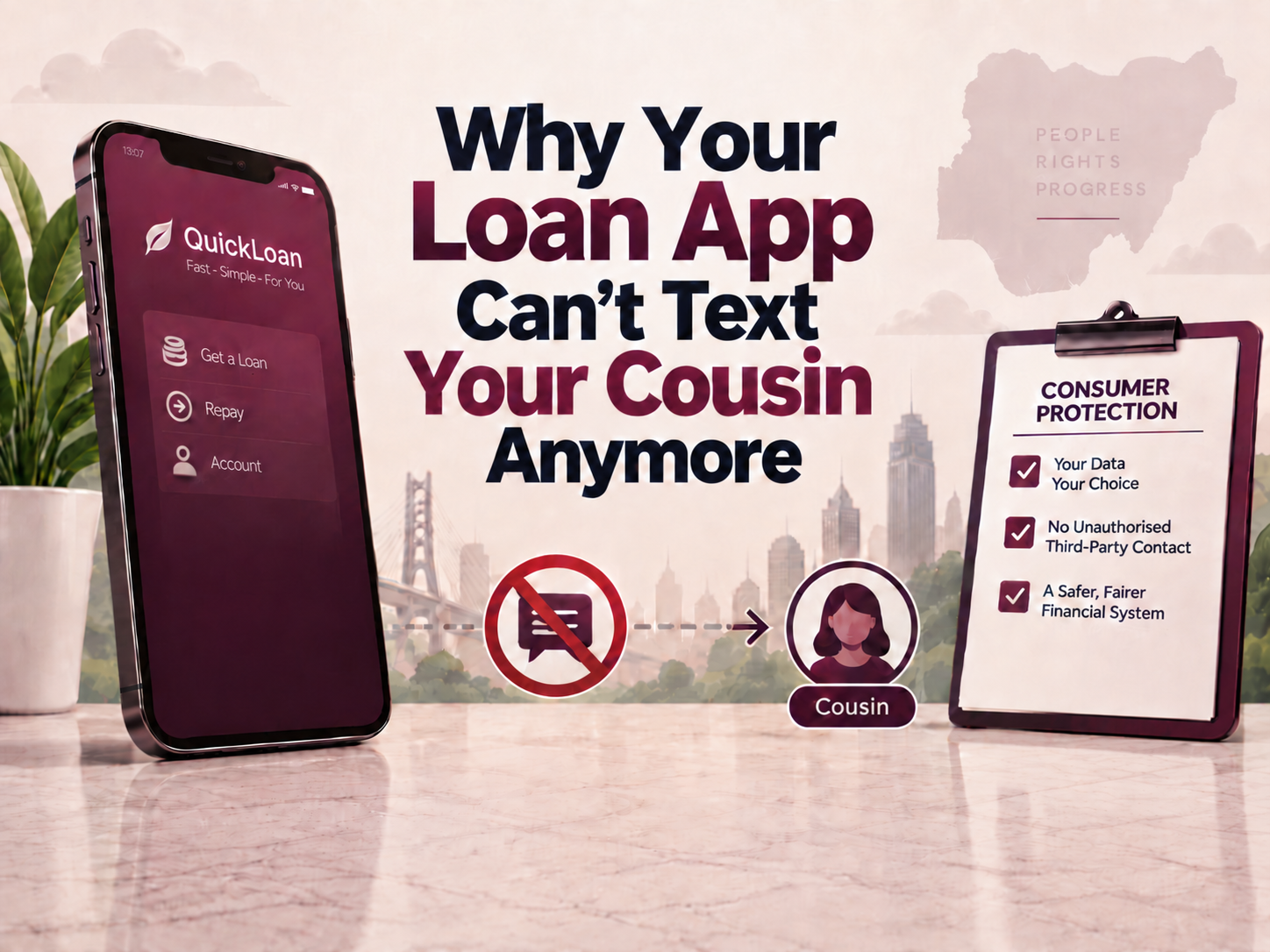
Some lenders have allegedly used borrowers’ phone contacts during debt collection, so you miss a repayment and your cousin or pastor gets an embarrassing message.
The DEON Regulations now require lenders to comply with the Nigeria Data Protection Act 2023 and related privacy and cybersecurity rules. Borrowing money doesn’t hand over a free pass to your contacts debt recovery doesn’t suspend privacy law.
Your Complaint Has a Clock on It
“We’ll respond in 14 working days” won’t cut it. Lenders must document complaint-handling procedures and publish contact channels.
Complaints are supposed to be resolved within 24 hours. Where that’s not practicable, the lender must tell you when, and that can’t exceed 48 hours. If your repayment gets deducted twice at 4pm, you shouldn’t wait until next Wednesday for an answer.
You can also escalate straight to FCCPC’s complaint channels if a lender stonewalls you.
Partners Are on the Hook Too
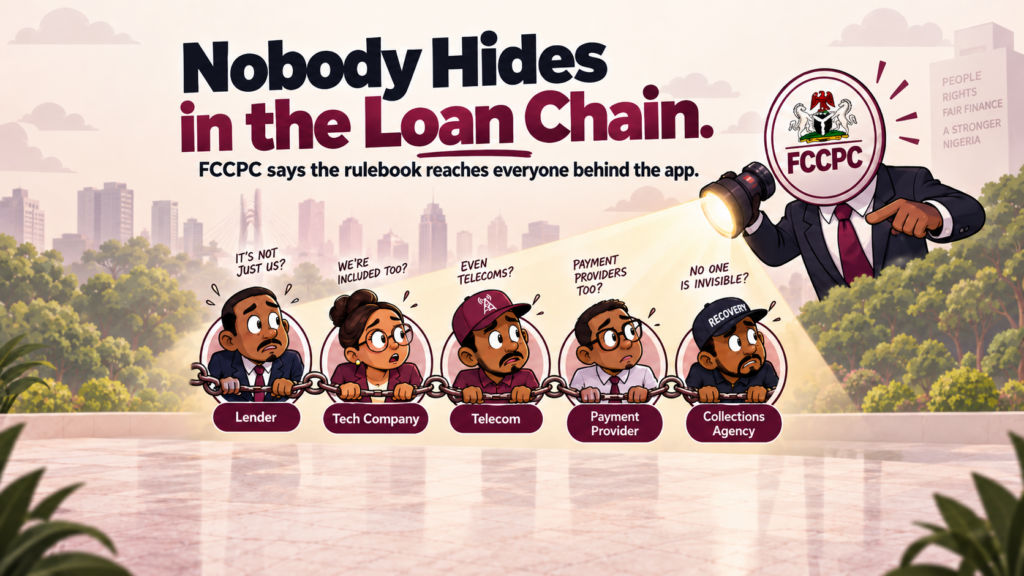
This isn’t just a rulebook for the company whose logo is on the app. It extends to lending partners and service providers, with approval requirements around lending agreements. A lender, a tech company, a telecom, a payment provider and a collections agency can sit behind one loan, and FCCPC is saying nobody hides inside that chain.
DEON Regulations: The Penalties Are Real
Sanctions include fines, suspension, delisting and revoked approval. An individual’s penalty can reach ₦50 million; a company’s can reach ₦100 million or 1% of last year’s turnover, whichever is greater. Directors can face disqualification for up to five years. This isn’t an “update the website when convenient” situation.
If You Run or Work With a Lending App
Walk through your own app as a first-time borrower would. Can you see the interest rate and every fee before accepting? Is anything credited automatically, without a request? Test your complaint process and time the response. Check your credit-assessment process, data permissions, registration, reporting and record-keeping. The annual reporting records described in the Regulations must be kept for five years from submission. Records must be supplied within 48 hours of an official FCCPC demand, unless its notice directs another timeframe.
If You’re Borrowing
Before you tap accept, know three things: what you’re borrowing, what you’ll repay in total, and exactly when it’s due. For lenders covered by these rules, check the FCCPC list of approved digital lenders. If credit lands that you never requested, question it. If undisclosed charges appear, question them too. If your data is misused or you face abusive recovery tactics, document it and use the lender’s complaint channel, then escalate.
Borrowing money doesn’t mean giving up your rights as a consumer.
Why This Matters to You
Digital credit is useful because it’s fast; ₦50,000 can move from “I need this” to “received” in minutes. But speed makes it easy to skip proper consent, honest pricing, affordability checks and real customer service. These rules aren’t against fast lending — they’re against invisible rules, and FCCPC announced that enforcement resumed after July’s ruling.
If this helped, share it with someone who uses a loan app. Knowing what a lender owes you is the first step in holding them to it.
This article is general information, not individual legal advice.
Need help with your next steps?
If you have questions about what these rules mean for your business or would like a consultation, someone at Startpal is happy to talk. Get in touch with Startpal or email support@mystartpal.com to discuss your next steps.
For more updates, explore Regulatory News.

One Response