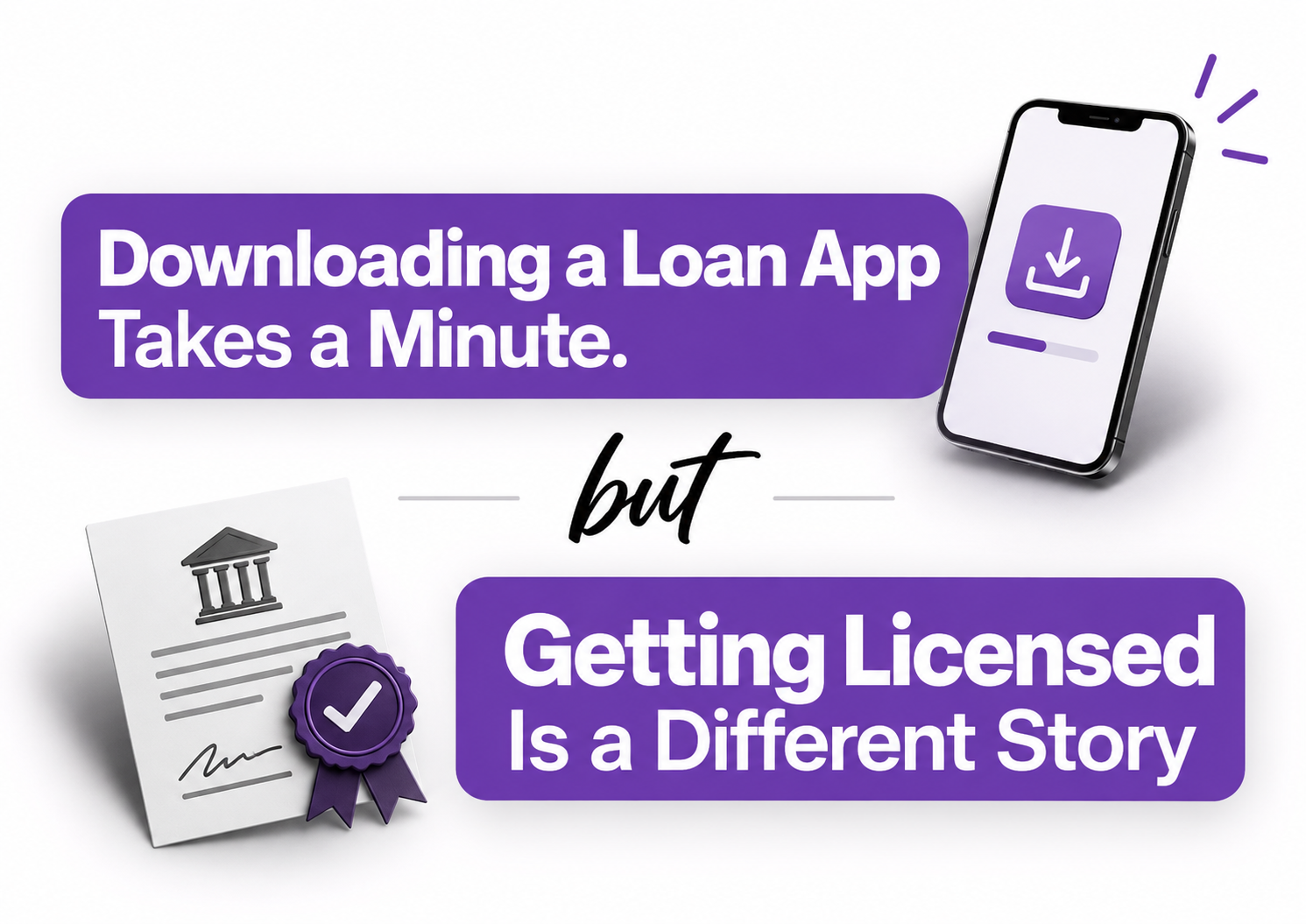
The rent is due, payday is still a week away, and a loan app promises to sort everything out before the kettle boils. That sounds useful until the repayment screen raises questions the advert never answered: how much will come out of the next salary, and what happens if the payment arrives late?
For someone building that app, the questions start much earlier. A smooth signup screen might win downloads, but digital lender licensing in Kenya involves checking the business behind it, including the people making decisions about customers and their money.
Digital Lender Licensing in Kenya: What Changed?
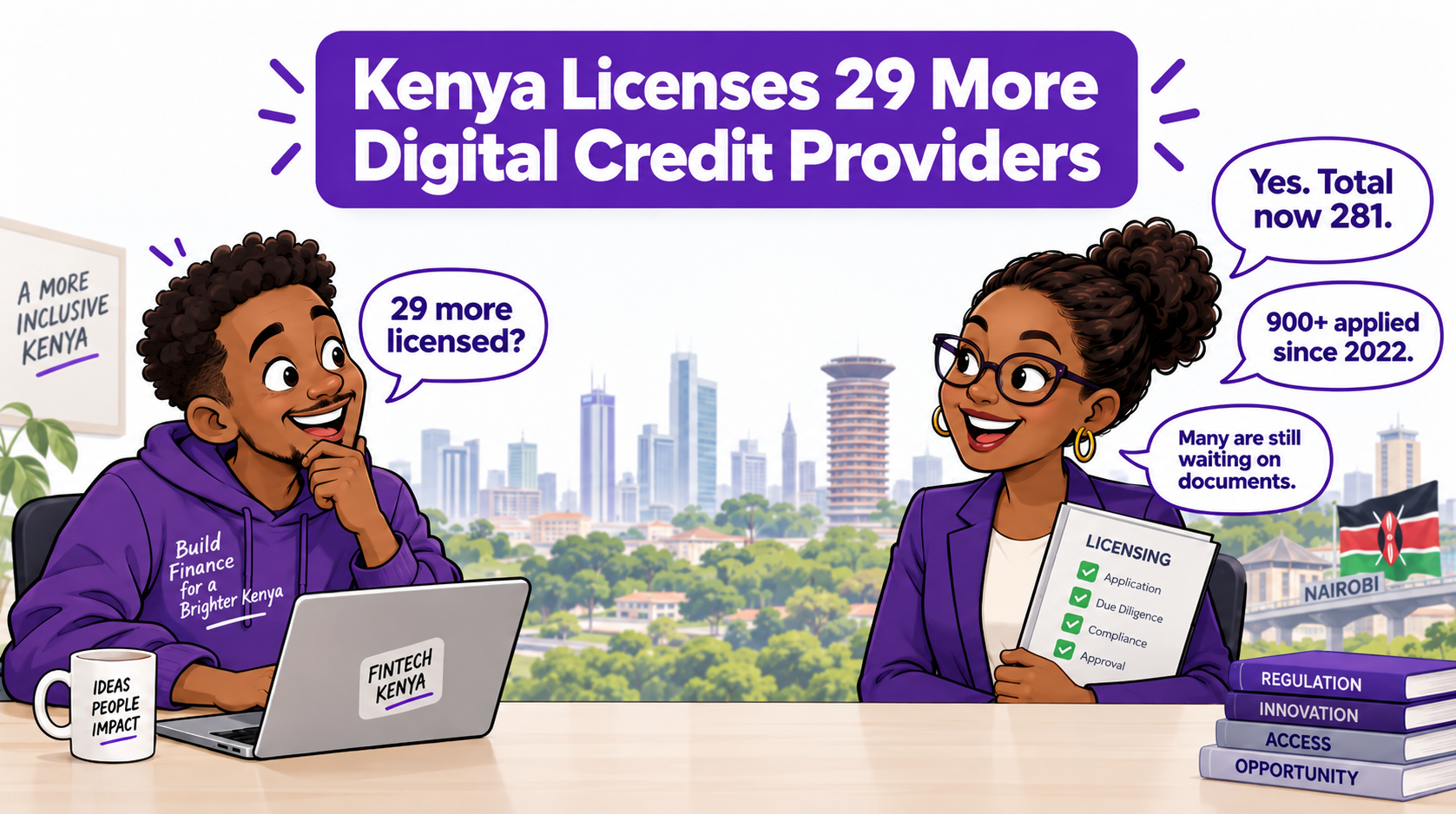
In its 30 September 2026 announcement, the Central Bank of Kenya said it had licensed 29 more digital credit providers, bringing the total to 281. It had received more than 900 applications since March 2022, with other applications at different stages, largely waiting for applicants to submit outstanding documents.
Those figures don’t mean everyone outside the licensed total has been rejected, nor do they tell us how long an individual application will take. They do give founders a reason to check whether their own submission is complete before blaming a delay on the review process.
The bank reviews business models, customer protection, and the suitability of proposed shareholders, directors, and managers. Its oversight followed complaints about expensive lending, unfair practices, harmful debt collection, and misuse of personal information.
Licensed providers had issued about 9.6 million loans worth KSh165.1 billion by August 2026. Dividing the value by the number gives an average of roughly KSh17,200, but an average cannot tell us each borrower’s loan size or spending purpose.
Before the Launch, Get the Business Ready
Imagine the app works beautifully during a demonstration, but nobody can explain how a borrower challenges an incorrect charge. The design team has finished its job, while the customer support team is still waiting for a process. That gap can turn a promising launch into a string of complaints.
A useful preparation exercise is to follow one customer through the whole service, from the first advert to the final repayment. Check what the advert promises, what the customer agrees to, and what the account actually shows, because those three versions should tell the same story.
Then try a less comfortable example: a payment fails, the customer disputes the balance, and a collection agent makes contact. Who checks the account, who answers the complaint, and what instructions does the agent follow? Writing down those steps helps the team spot missing decisions before a real customer needs an answer.
Do the same with information the app collects. Keep a clear record of each permission, why the service needs it, and who can access the information, so the technical team and the people answering customer questions can explain the same process.
These are practical preparation steps, rather than a complete application checklist. Use the bank’s current requirements for the formal submission, and keep a record of documents supplied and questions still awaiting a response. For more updates affecting businesses, explore Startpal’s Regulatory News section.
Before Accepting a Loan, Check the Full Deal
Borrowers face a different problem: the urgent need for money can make a repayment date feel very far away. Before accepting an offer, write down the amount received, the total amount due, and the due date, then compare that payment with the money expected to be available.
If the app shows one figure in an advert and another in the agreement, pause and ask for an explanation. Save the terms and any response, because having the wording to hand is more useful than trying to remember it after a disagreement starts.
Check the lender’s legal name against the bank’s published licensing information, rather than relying only on the app’s name or a badge in its advert. A licence still leaves room for questions about price and service, so read the offer as carefully as the company details.
The bank accepts reports of unregulated digital credit providers at dcps@centralbank.go.ke. This article concerns Kenya; a business operating elsewhere needs to check the rules and regulator that apply there.
A quick download can be handy when money is tight, but the repayment deserves more thought than the installation. For founders, that same care starts before launch, when there is still time to fix a confusing agreement or a missing customer process.
Have questions or need a consultation? Someone at Startpal is happy to talk through the next steps for your business. Contact Startpal to arrange a conversation.